Sleep surfaces · Comfort guide
Latex Toppers: How Thickness and Firmness Shape Sleep Comfort
A latex topper can bring a new character to a familiar mattress: a little more cushioning, a little more spring, or a more considered balance between the two. Its effect, however, depends on more than the material itself. Thickness, firmness, body shape, sleep position, and the mattress underneath all help determine whether the change feels quietly transformative—or simply different.
In the language of bedding, “topper” sounds like a finishing touch. In practice, it is a layer with a distinct role: to modify the surface feel of a mattress without replacing its core support. Latex is often chosen for its buoyant response and resilient feel. Rather than allowing the body to sink slowly into a deep impression, it tends to compress and push back with a lively, spring-like quality. That combination can feel gently contouring while still making it relatively easy to shift position.
There is no universal recipe for comfort. A thin, soft latex layer may be enough to take the edge off a firm mattress, while a thicker, firmer topper can produce a more substantial change in the way the bed feels. Yet additional material is not automatically better, and “firm” is not a synonym for “supportive” in every situation. The useful question is not simply which latex topper is best, but which combination of thickness and firmness suits the sleeper, the mattress, and the conditions of the room.
This guide explores those decisions in practical terms. It explains what thickness can—and cannot—change, how firmness is described, why the underlying mattress matters, and how to assess comfort without relying on a single label or a promise that one surface will suit everyone.
What a latex topper changes
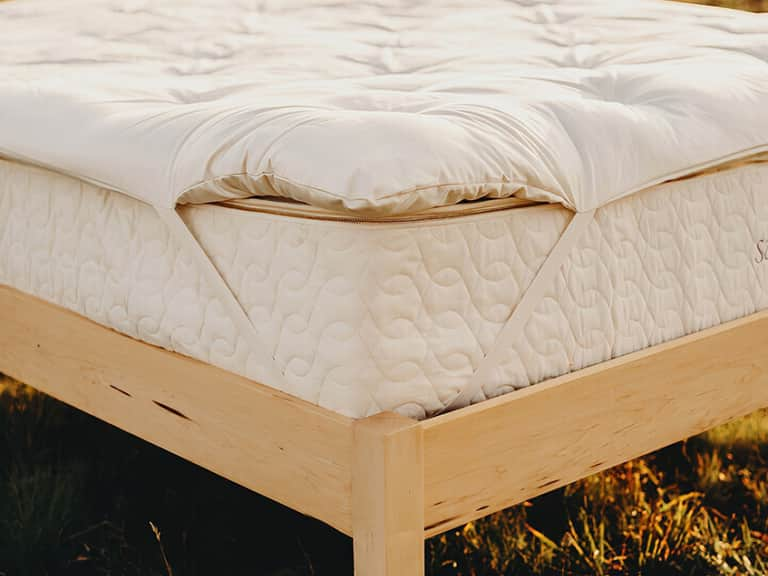
A topper adds a comfort layer above the mattress. Depending on its construction, it can soften a surface, provide more cushioning at pressure points, or alter the mattress’s responsiveness. Latex is valued by many sleepers for its combination of contouring and lift: it compresses beneath the body, but tends to rebound promptly when pressure moves. That response can make the surface feel more buoyant than materials that conform slowly and closely.
It helps to distinguish surface comfort from structural support. The topper influences the first impression of the bed and the way pressure is distributed at the surface. The mattress beneath it remains responsible for much of the deeper support. If the mattress is in good condition but feels too firm, a topper may offer a useful adjustment. If it has sagging, a damaged core, or a pronounced hollow, adding a layer is unlikely to restore the underlying support. The topper may soften or disguise the sensation temporarily, but it cannot reliably repair a failing foundation.
This distinction matters because a bed can feel plush at first touch while still leaving the body poorly supported over the course of a night. Conversely, a surface that feels quite firm in a brief showroom test may provide adequate cushioning once the sleeper has settled into a natural position. Comfort is a relationship between layers, not a property of one component alone.
Thickness: a question of degree
Thickness describes the depth of the latex layer, usually measured in inches. It is not a direct measure of quality, nor does it tell the whole story about how a topper will feel. Still, it offers a useful first indication of how pronounced the change may be. A thinner layer generally makes a subtler adjustment, while a thicker one has more material available to compress and contour beneath the body.
A thinner layer for a lighter touch
A relatively thin topper may be appropriate when the mattress is basically comfortable but feels a little too firm, or when the goal is a modest change rather than a new bed-like sensation. It can add a touch of cushioning without dramatically altering the surface’s character. Because less material separates the sleeper from the mattress, the feel of the original bed may remain more apparent.
This can be appealing to people who like a responsive, close-to-the-mattress feel or who want to preserve the bed’s existing firmness while taking the sharpness out of the surface. A thin topper may also be a considered option when the mattress is already relatively soft and the sleeper wants only a small adjustment. It should not be expected to compensate for major discomfort caused by a mattress that is worn, uneven, or fundamentally unsuitable.
A thicker layer for a more noticeable change
A thicker topper can create a more substantial comfort layer. It may allow more room for compression and make the mattress feel more cushioned, particularly at the shoulders and hips. For some sleepers, this extra depth can improve the sense of pressure relief. For others, especially those who prefer a firmer, more direct feel, it may seem too enveloping or make the bed feel less stable.
More thickness also means that the sleeper’s experience is shaped more strongly by the topper itself and less by the surface feel of the mattress below. That can be desirable when the original surface is notably firm, but it does not eliminate the importance of the base. A topper laid over a mattress with a deep sag still follows the irregular foundation. The additional depth may soften the transition, but it cannot restore the missing support beneath the sag.
Why inches are not the whole story
Two toppers with the same stated thickness can feel different because their firmness, latex formulation, and construction differ. The sleeper’s body weight and shape also affect how far the material compresses. A layer that feels substantial to one person may feel comparatively slight to another. For that reason, thickness should be read as a clue about potential adjustment—not as a guarantee of a particular sensation or outcome.
Think of thickness as the volume of the change, not its precise character. Firmness helps describe that character; the sleeper and mattress complete the picture.
Firmness: more than a number
Firmness is a description of how a surface feels under pressure. It is not always measured or labeled in a standardized way across manufacturers, so terms such as “soft,” “medium,” and “firm” can be useful as broad categories but should not be treated as perfectly comparable ratings. Even when technical measurements are provided, they may describe a material sample under specific test conditions rather than predict exactly how a particular person will experience it at home.
A softer latex topper will generally compress more readily beneath the body. That may create a gentler, more cushioned feel and help reduce the sensation of pressure where the body meets the bed. A firmer version usually compresses less and offers a more elevated, stable impression. But the same firmness can feel different depending on the sleeper’s weight, the thickness of the layer, and the mattress beneath it.
It is therefore useful to avoid choosing by adjective alone. A “soft” topper on a very firm mattress may feel moderate to one sleeper; on a soft, deeply cushioned bed, it might feel like too much. The interaction is what matters.
Sleep position and pressure relief
Sleep position offers a practical starting point when assessing latex firmness and thickness, though it should not be mistaken for a rigid rule. People move during sleep, and many do not remain in one position all night. Comfort preferences, body proportions, and the condition of the mattress may matter as much as a position label.
Side sleeping
Side sleepers often place more concentrated pressure on the shoulder and hip. If the surface is too firm, those areas may feel compressed; a more cushioning layer can help soften the contact. A softer or thicker latex topper may be worth considering when the existing mattress feels unyielding, but excessive sink can make the bed feel less balanced. The aim is not to sink as far as possible. It is to allow the shoulders and hips enough accommodation while the body remains comfortably supported.
Back sleeping
Back sleepers may prefer a surface that balances cushioning with a sense of even support. A topper that is too firm may feel hard across the lower back and other contact points, while one that is too soft may feel less stable. A moderate firmness can be a reasonable place to begin, but the mattress underneath and the sleeper’s build remain decisive. The most useful test is whether the body feels settled rather than strained, without an impression of sagging.
Stomach sleeping
Many stomach sleepers favor a relatively firm, level surface because excessive softness may allow the midsection to sink more deeply. A thick, soft layer can change the bed substantially, so a firmer or thinner option may be more appropriate for someone who already likes a stable feel. This is not an absolute prescription: individual comfort varies, and any persistent pain or sleep concern should be discussed with a qualified health professional rather than addressed through bedding alone.
Combination sleeping
For people who shift between positions, responsiveness can be especially noticeable. Latex’s buoyant quality may make it easier to move than a surface that holds a deep impression, though the overall feel still depends on the particular material and construction. A balanced firmness and a moderate change in thickness may appeal to sleepers who want both cushioning and ease of repositioning. The best choice is the one that remains comfortable across the positions a person actually uses.
Body weight, shape, and the feel of the same topper
A firmness label cannot account for every body. A person who applies more pressure to the surface may compress a topper more deeply than someone who applies less, which can make the same layer feel softer. Body shape also influences where pressure is concentrated and how the sleeper settles into the bed. These differences help explain why reviews and recommendations can conflict without either person being mistaken.
When comparing options, ask how the topper is likely to respond under your body rather than relying solely on a generic rating. If possible, consider the return policy, trial conditions, and care requirements before purchase. These practical details are valuable because a brief first impression may not reveal how a new surface feels across several nights or in different sleep positions.
The mattress beneath: the essential context
A latex topper does not work in isolation. A firm, level mattress may provide a useful foundation for a softer comfort layer. A soft mattress may make an additional plush layer feel excessive. A mattress with uneven wear may create an uneven result, since the topper follows the shape beneath it rather than floating above it as an independent support system.
Before choosing, examine the mattress itself. Does it feel level across the surface? Is the discomfort limited to a sense of hardness, or does the bed have a visible or palpable dip? Does the sensation change when sleeping in another area of the mattress? These observations can help distinguish a surface-feel issue from a structural one. If the bed is sagging, a topper is unlikely to be a lasting solution; replacing or repairing the underlying support may be more appropriate.
Also consider compatibility with the bed frame and bedding. An added layer raises the sleeping surface, which can affect fitted-sheet depth and the ease of getting in and out of bed. A topper should lie evenly and stay in place during normal movement. Check the manufacturer’s guidance on suitable bases, cleaning, ventilation, and care rather than assuming that every latex product has identical requirements.
Temperature and everyday comfort
Sleep temperature is another part of the decision. Latex is often described as responsive and less enveloping than some slow-conforming foams, but no material can promise that every sleeper will feel cool. Temperature depends on the complete bedding system: room conditions, mattress construction, sheets, blankets, personal physiology, and the amount of body contact with the surface all play a role.
A topper that adds depth can also change how much of the body is in contact with the comfort layer. If you tend to sleep warm, consider the product’s construction and cover, as well as whether your current bedding traps heat. Breathable fabrics and a comfortable room environment may matter just as much as the material label. Treat cooling claims as product-specific information to evaluate, not as a universal property guaranteed by the word “latex.”
A thoughtful way to choose
Rather than starting with a favorite thickness or an appealing firmness word, begin with the problem you want to solve. A precise goal makes the choice clearer. Are you trying to soften a mattress that feels too hard? Add a little more contouring? Preserve a buoyant feel while improving surface cushioning? Or are you hoping a topper will correct a bed that has lost its shape? The last goal is a warning sign: a topper is not a reliable substitute for sound support.
- Assess the mattress first. Separate surface firmness from sagging, unevenness, or a failing support core.
- Describe the change you want. “A little softer” is more useful than “the best topper,” because it gives you a direction without assuming one solution fits all.
- Consider your usual positions. Think about where you feel pressure and whether you change position through the night.
- Compare firmness and thickness together. Neither characteristic should be considered in isolation.
- Check practical details. Review dimensions, cover and care instructions, mattress compatibility, sheet depth, and trial or return terms.
- Allow time to evaluate. A new surface may feel unfamiliar at first. Assess it over ordinary nights rather than relying only on a few minutes of testing.
Keep a simple record during the evaluation period: note sleep position, areas of pressure, ease of movement, and whether the bed feels too soft or too firm on waking. Patterns are more useful than a single night’s impression. If discomfort persists or seems related to a medical condition, a bedding change should not replace advice from an appropriate health professional.
Common assumptions worth reconsidering
“Thicker is always more comfortable.”
Additional thickness can make a change more noticeable, but comfort is not a contest in depth. A thick layer may feel too soft, alter the mattress’s response, or make movement less satisfying for someone who prefers a closer, firmer surface.
“A firm topper always provides better support.”
Firmness describes a surface sensation; it does not independently determine whether the entire bed supports a particular sleeper well. A very firm layer may create uncomfortable pressure, while a softer one may feel more balanced over a firm base. The combination matters more than the label.
“A topper can fix any mattress.”
A topper can adjust surface comfort, but it cannot reliably correct a broken, sagging, or substantially worn mattress. If the base is uneven, the added layer may reproduce that unevenness. Identify the source of discomfort before expecting a topper to solve it.
“One sleep position determines the answer.”
Position is a useful guide, not a verdict. Body shape, personal preference, movement during sleep, and the mattress underneath all influence the result. A recommendation based on position alone can overlook the most important details.
The lasting impression
Latex toppers are best understood as instruments of adjustment. Thickness influences how much a surface may change; firmness shapes the quality of that change. Together, they affect cushioning, responsiveness, and pressure relief, while the sleeper and the mattress beneath determine how those qualities are experienced.
A thoughtful choice begins with a clear-eyed assessment of the bed you already own. If its structure remains sound and its surface simply feels too firm, a carefully selected topper may bring a welcome shift. If the mattress has lost its support, a new layer is unlikely to make the problem disappear. And if comfort is the goal, the most persuasive specification is not a single number or a grand claim, but a combination that suits your body, sleep habits, and real-life preferences.
In the end, the right latex topper is not necessarily the softest, thickest, or most highly rated. It is the one that makes the bed feel more naturally yours—comfortably cushioned, responsive when you move, and well matched to the support that lies beneath.